Universal App State Management Flow
Catalyst separates route data from application-wide state. That distinction matters more in universal apps, where SSR, client navigation, and native runtime concerns all interact with the same React tree.
serverFetcher/clientFetcher -> Route Data Cache -> useCurrentRouteData
                         \-> Optional Redux Store -> useSelector/useDispatch
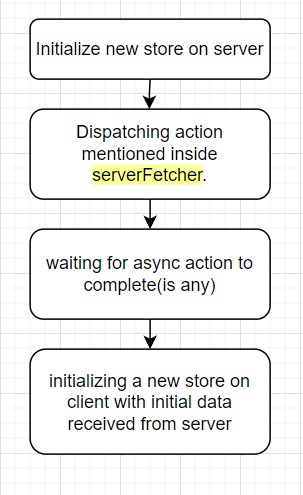
State Layers
Route data
Use route fetchers plus useCurrentRouteData for data that belongs to the active page:
- page content
- detail payloads
- route-scoped filters
- server-rendered initial state
This is the default Catalyst model.
Global state
Use Redux or another global store only for state that genuinely crosses route boundaries, such as:
- logged-in user context
- global feature flags
- cart or session-level shared state
- UI state that must survive route changes
Why The Separation Matters
- route data should follow routing and SSR lifecycle rules
- global state should not become a second, competing page-data cache
- keeping them separate avoids stale state and duplicated fetch logic
Guidance
- Prefer route data hooks for page-level data.
- Use Redux only for truly cross-route shared state.
- Pass shared dependencies through
fetcherArgswhen route fetchers need store access. - Keep cache invalidation explicit when mutations affect route data.
- If
useCurrentRouteData()returnsundefined, check that the app is wrapped inRouterDataProvider.
Universal App Considerations
In universal apps, route data can be affected by transport selection and native connectivity behavior. Keep request assumptions out of page components when possible:
- let the route data layer own initial page requests
- avoid mixing native bridge state directly into route data unless the route truly depends on it
- handle offline or degraded transport states at the shell or shared UI level